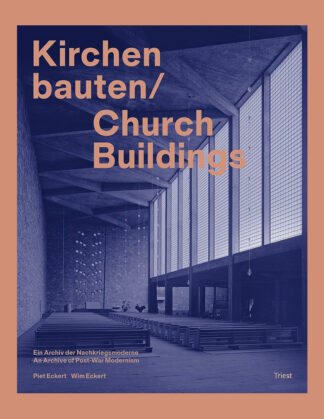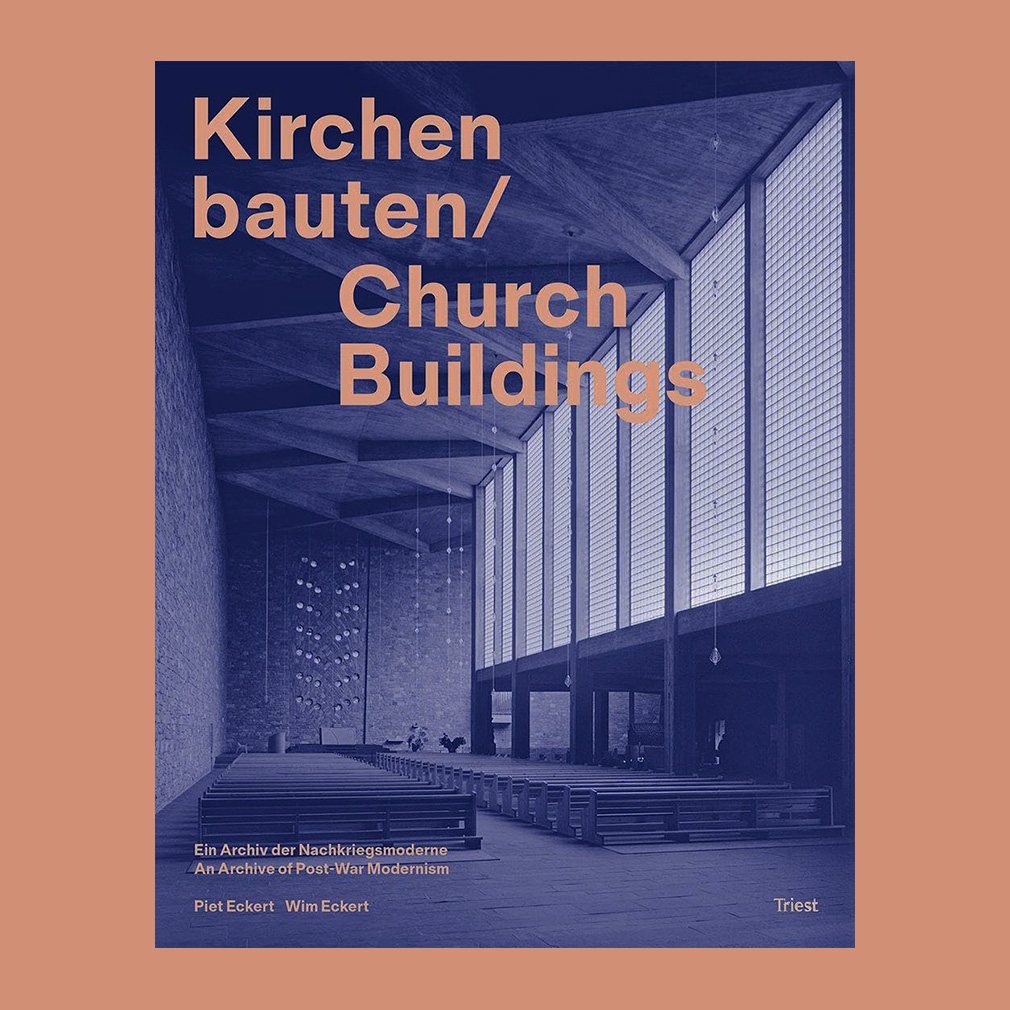
Church Buildings: An Archive of Post-War Modernism
Piet Eckert, Wim Eckert (Eds.)
Triest Books, 2026
€49,00
• Fundamental analysis of developments in engineering and construction during this period and the social context
Building after the Second World War meant building in extraordinary circumstances. This was a time marked by a lack of construction materials, the need to build with broken-down material and simple resources, with the later advent of reinforced concrete and experiments with new construction options and materials. The parallels to contemporary demands in construction are many and diverse.
Today, we are faced with an ongoing loss of church buildings and also the documentation of their construction. Taking a new approach, for the first time the book presents and analyses the buildings in their historical context, associating them with architectural and structural strategies. Although there exist various investigations of postwar buildings from the vantage point of art history, they have yet to be classified in terms of construction. The book fills this knowledge gap.
Transcending an art-historical assessment, a novel feature is the critical, analytical examination that specifically explores the interplay of structure and space. As a result, the book is equally of value in terms of heritage conservation. What is more, this approach has the potential to draw on the historical structures to devise solutions to modern-day construction strategies, for example with regard to circular economy or resource-efficient building practices.
– Auferstehungskirche, Cologne, 1967–1968, Georg Rasch, Winfried Wolsky
– Christuskirche, Bochum, 1956–1959, Dieter Oesterlen
– Heilig-Geist, Emmerich am Rhein, 1964–1966, Dieter Georg Baumewerd
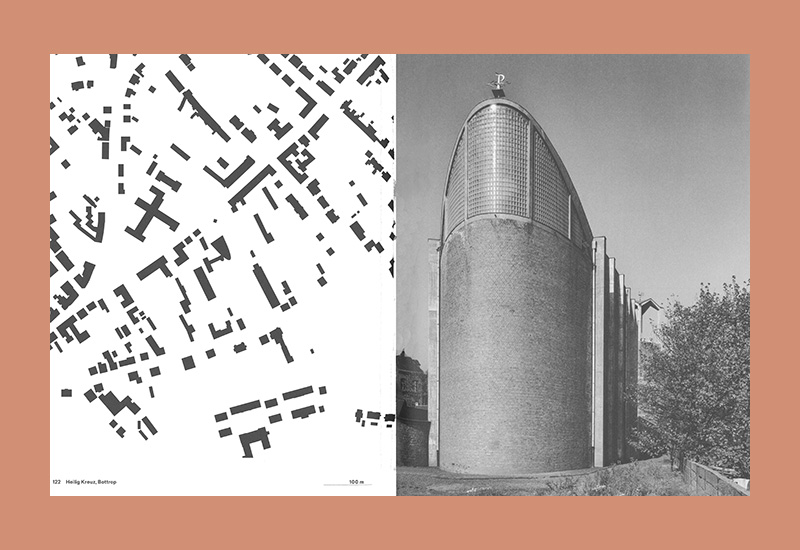
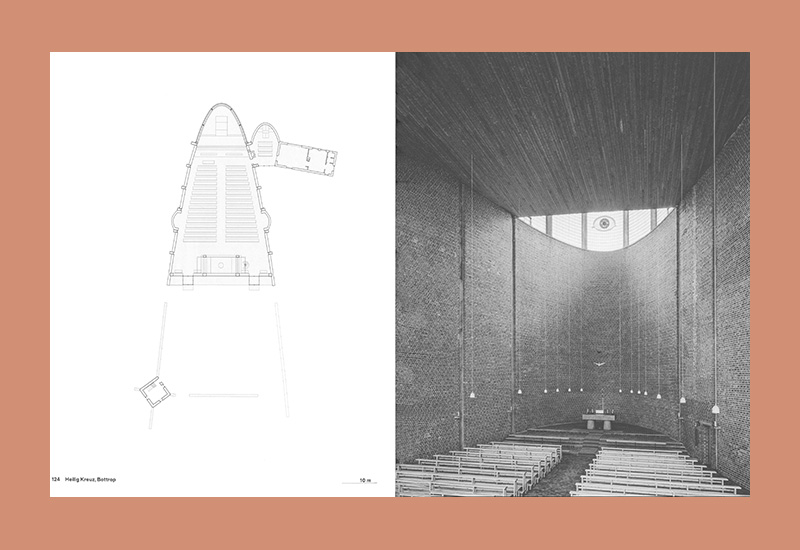
– Heilig Kreuz, Bottrop, 1955–1957, Rudolf Schwarz, Josef Bernhard
– Jakobuskirche, Düsseldorf, 1962–1963, Eckhard Schulze-Fielitz
– Johanneskirche, Bochum, 1965–1966, Hans Scharoun
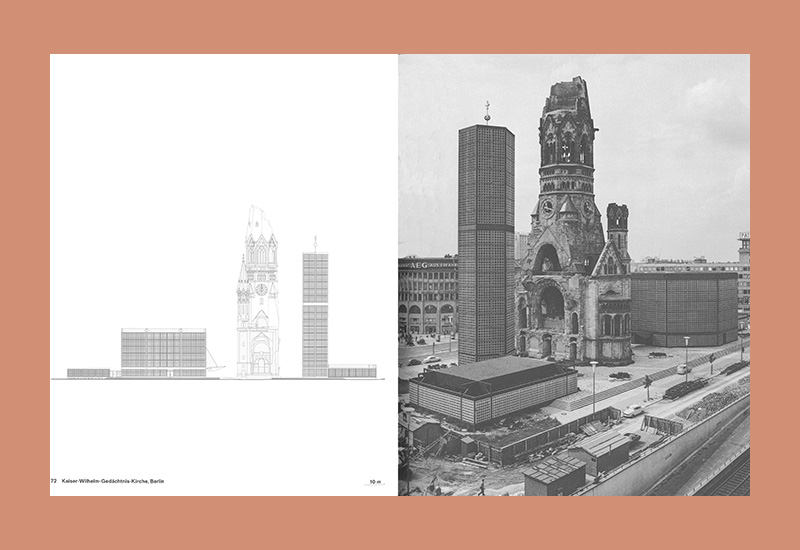
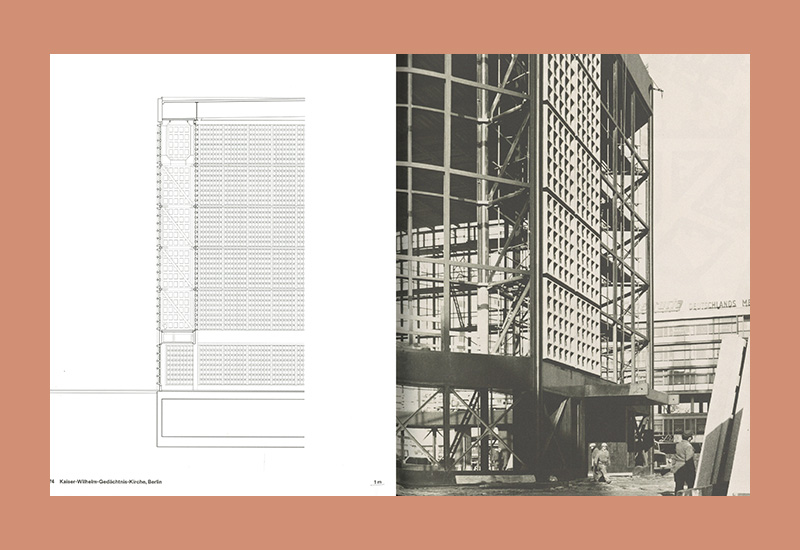
– Kaiser-Wilhelm-Gedächtnis-Kirche, Berlin, 1959–1963, Egon Eiermann
– Mariendom, Neviges, 1966–1968, Gottfried Böhm
– Pfingstbergkirche, Mannheim, 1962–1963, Carlfried Mutschler
– St. Anna, Düren, 1955–1956, Maria und Rudolf Schwarz
– St. Kilian, Paderborn, 1965–1967, Joachim Georg Hanke
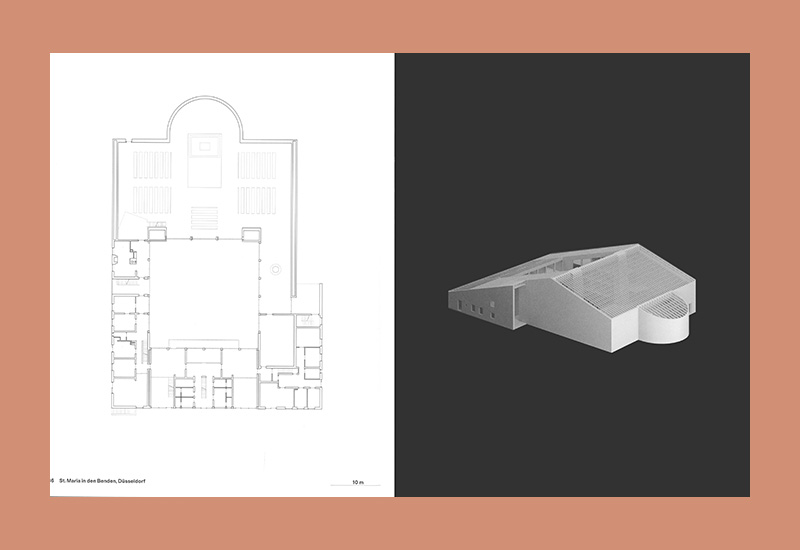
– St. Maria in den Benden, Düsseldorf, 1958–1959, Emil Steffann, Nikolaus Rosiny
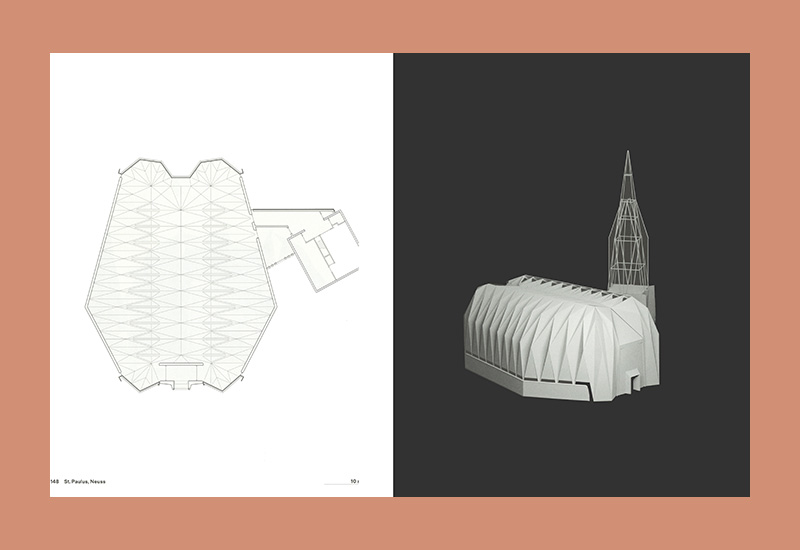
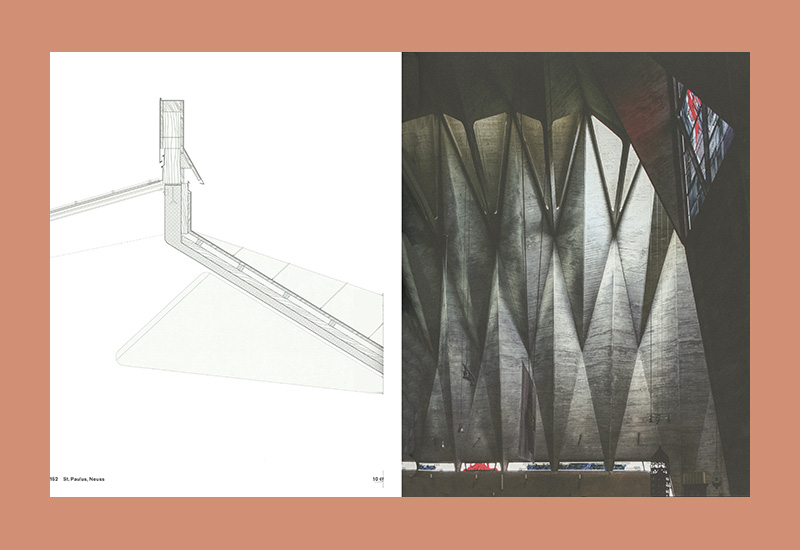
– St. Paulus, Neuss,1966–1968, Fritz Schaller, Christian Schaller
– St. Rochus, Düsseldorf, 1953–1955, Paul Schneider-Esleben
– St. Willibrord, Waldweiler, 1969–1973, Heinz Bienefeld
ISBN: 9783038631057